There are a number of Tesla biographies now available. I suspect I may have picked the wrong one. Much of it is serviceable and the bare facts of Tesla’s life and times, presented copiously and in rigid chronological order, are interesting enough to make up for a plodding style. There are, however, definite flaws. For some reason the author chose to highlight a platonic romance between Tesla and a married friend. The details are totally uninteresting and its dramatizations are painful to read. It is as if an editorial mistake had strewn random pages of a lukewarm romance novel into a Tesla biography. Every bit of it could have been left out and the result would have been an unmitigated improvement.
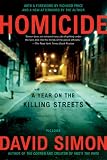
A year in the life of Baltimore’s Homicide department. Simon is a very detailed observer, though he goes in for a bit too much purple prose sometimes. But it’s riveting stuff.
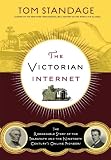
A fun little book about the telegraph, the internet before there was an Internet, and an invention at least as revolutionary as the modern one we all know and love and hate.
A thorough analysis of alternate theories of societal collapse is followed by a presentation of the author’s own theory, with examples drawn from past collapses including the Roman Empire and the Mayan Empire. The book is at its best during the initial analysis of other theories, which come under rigorous scrutiny. Particularly entertaining are the author’s evisceration of “mystical” explanations (the people lost their vigor!).
The theory of collapse presented is centered around the notion of declining marginal returns on investment in complexity. Essentially, the author posits that societies become vulnerable to collapse when the returns on societal complexity decline or turn negative. And that in fact such “collapses”, rather than always being a disaster from the point of view of the people involved, represent a rational response to a situation where complexity is no longer providing returns that justify its costs, thus making a switch to a simpler society a better choice economically.
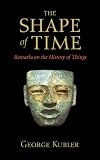
A curious book about the unfolding of history, in particular the history of made objects, especially art, but touching also on the relationship between artists and artisans and their place in a historical series. The author argues against the use of analogies between an artistic movement and a lifetime, i.e., the “birth”, “growth”, and “senescence” of some movement such as Impressionism. Instead, the history of a physical form should be understood as the development of the internal logic of the form itself as it is applied to some problem, artistic or practical.
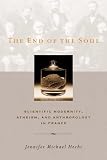
Here’s a part of history I was totally unaware of: The Society of Mutual Autopsy, a group of free-thinking atheist anthropologists in 19th century France who pledged to autopsy each others’ corpses after their death. And they did, too! They also had a huge influence on noted French thinkers and politicians of the time. Hecht’s history includes a healthy dose of insightful but readable analysis. Must read more of this author!
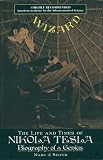 There are a number of Tesla biographies now available. I suspect I may have picked the wrong one. Much of it is serviceable and the bare facts of Tesla’s life and times, presented copiously and in rigid chronological order, are interesting enough to make up for a plodding style. There are, however, definite flaws. For some reason the author chose to highlight a platonic romance between Tesla and a married friend. The details are totally uninteresting and its dramatizations are painful to read. It is as if an editorial mistake had strewn random pages of a lukewarm romance novel into a Tesla biography. Every bit of it could have been left out and the result would have been an unmitigated improvement.