It’s hard to say no to a novel that includes (briefly) Sir Isaac Newton as crime-fighter. Plus Ben Franklin, Cotton Mather, and, of course, witch hunting and its detractors (chief among them our heroine). It kept my interest, but the language is a bit formal (I guess it’s meant to be of the period) and there were a few too many side-trips.
Free markets, free elections, and peaceable relations among sovereign states are the “Wilsonian triad”, three inter-locking proposals made by Woodrow Wilson in his failed attempt to establish the League of Nations on a sound footing. Mandelbaum’s thought-provoking case is this: the trio did eventually succeed in defeating all comers, at least to the point where they have hegemonic, if not universal, status with no credible alternatives in sight.
One fact we’ve uncovered in this series is that mixing synchronous “plain Python” code with asynchronous Twisted code is not a straightforward task, since blocking for an indeterminate amount of time in a Twisted program will eliminate many of the benefits you are trying to achieve using the asynchronous model.
Twisted is an ongoing project and the Twisted developers regularly add new features and extend old ones. With the release of Twisted 10.1.0, the developers added a new capability — cancellation — to the Deferred class which we’re going to investigate today.
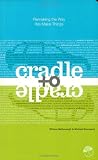
A compelling argument for addressing sustainability with new approaches to design. The book itself is not made of paper, but of re-usable waterproof plastic.