A humane elegy to the inhabitants of the “troglodyte world” of the Great War trenches and how their experience and response have shaped our view of war and the modern world ever since.
A pretty fun and fast-paced sci-fi read. Though nominally set in a dreary future, the book’s premise allows it to pack in as many ’80s references as it’s possible for a novel to have.
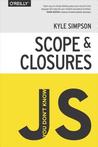
A very nice explanation of this-binding and prototype delegation in Javascript. This cleared up a lot of the arcana of Javascript’s object system for me.
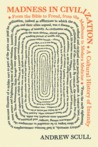
A history of how civilization has viewed and dealt with the mentally ill in its midst. It is not a proud history. The seriously mentally ill do not seem to be much better off in 2015 than they were in any preceding century.
What a great little book. This might be the first Javascript book I’ve managed to finish without having my eyes glaze over from the tedium. Modern technical books tend to lean far too much on how-to examples and not enough time on deeper explanations. This book focuses on one particular aspect of the language, scope rules and closures, and explains it in depth. The author understands how important well-crafted analogies and mental models are for achieving genuine understanding.
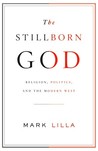
A history of the debate (putting it very mildly) in the West on the proper role of religion in politics. Lilla uses the Great Separation to name the period, beginning with Hobbes, in which the idea that religion and politics should be separate began to take shape and recounts the different thinkers who advanced this idea that eventually came to be the default assumption in the West. But, as Lilla shows, this idea was never inevitable and is not now irreversible. The “Stillborn” in the title refers to an early 20th century attempt by liberal thinkers and theologians in Germany to bring politics and religion back together. Though it never took hold and was swept away by the events of the second world war, it demonstrates how a religiously-infused politics will always be a “live” idea.
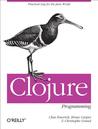
This is a very good reference to Clojure, I can recommend it for anyone wanting to learn the language. I like a lot of the ideas in Clojure and it’s well worth learning the basics just to be introduced to them. Ultimately, I found I just didn’t find the language as compelling as some others I’ve learned recently like Erlang and Go, which seem to require a smaller mental model to work in.
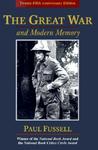 The Great War and Modern Memory by Paul Fussell