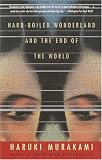
Murakami is a very, very good writer. There’s no two ways about it. And while I enjoyed this book a great deal, I think I would have enjoyed it a bit more if I hadn’t had a basic understanding of cryptography (the science of making and breaking codes).
With most reasonably good science fiction you get good science and decent fiction. In this book, you get some really, really good fiction and some really, really silly science. Even with what little I know, the passages on cryptography on display here just don’t make a lick of sense. And, it doesn’t help that most of them are delivered via the dialogue of what has to be one of literature’s most annoying scientists.
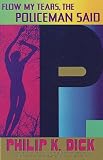
In the dystopian future of 1988, a popular singer with his own television show finds himself down the rabbit hole. Interesting tidbit: in 1988, quadraphonic stereos and flying cars will be commonplace. I can’t wait!
The strange, almost magical power that music can exert over the human mind and self is the theme Sacks explores in his latest popular work. The scope is wide and includes music impairments, musical prodigies, music as therapy, and music as lifeline for people who are otherwise profoundly neurologically impaired.
The Old Kingdom discovers what happens when your beliefs start coming true. Pratchett is a top-flight satirist and fantasy is more his weapon than his medium.
This is a pretty little Mexican folk tune. I’m not too happy with this recording, but I’m ready to move on to another song and this one is really meant for a classical guitar. I think I’ve figured out where most of my background noise is coming from – my computer.
Schneier analyzes the concept of security by breaking it down into five concrete questions that must be answered in any security situation (computer or otherwise). With clear exposition he draws on all aspects of life for his examples, with a somewhat heightened focus on terrorism.