Book: The Moral Animal
Wright presents an excellent overview of evolutionary psychology and delves a little into some of the moral issues it raises.
Wright presents an excellent overview of evolutionary psychology and delves a little into some of the moral issues it raises.
The former President enumerates many ways in which the present administration is deviating from or actively destroying what have been long-standing American values (even if Americans have not always lived up to them). Carter has a light but meandering style that makes for a quick read.
A 3-novel collection. Looks like Wodehouse will be my replacement for Rex Stout for a while.
A thoughtful and engaging history of Islam. Aslan argues that the current wave of violence that is coursing through the Muslim world represents an internal conflict as Islam goes through its equivalent of the Reformation, rather than a war against the West. Let us hope he is right.
The first six chapters of Diamond’s unfinished book on the shadier side of alternative medicine, plus miscellaneous selections from his other writing. Diamond died of cancer before he was able to finish what was clearly going to be a supreme debunking of medical mumbo-jumbo.
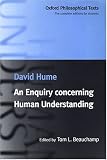
Hume’s classic philosphical investigation into the nature and limits of human knowledge and its acquisition.
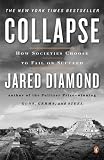
Diamond explores the causes of societal collapse by examining the failure of earlier societies such as the Easter Islanders and the Greenland Norse. This is a worthy successor to Guns, Germs and Steel, though it is not as engaging to read.
An excellent and thorough reference to the Debian system, slightly marred by typos and grammatical mistakes.
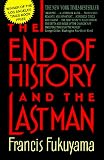
This book has a similar problem as The Selfish Gene, namely, both authors chose as their title a provocative phrase that is easily misunderstood without reading further, thus inviting a host of criticism from people who did not bother to read between the covers.
That being said, this book does have a number of flaws. The basic premise is that Hegel’s conception of dialectical history (as interpreted by a later philosopher, Alexandre Kojeve) is true as given and liberal democracy represents the end point of history in the sense that it contains none of Hegel’s contradictions which lead to the next stage in history. So, while history seen as a flow of events will continue, History as the directional progression of societal forms stops essentially with modern day Western civilization. Lucky for us!
Heinberg presents a compelling and rather startling case for the near-term end of the industrial era, caused in large part by the end of cheap supplies of petroleum.
This book is part of the burgeoning movement known as Peak Oil.
Heinberg’s argument is generally quite solid, but he may be dismissing some alternative forms of energy, such as nuclear, too quickly. Although it may be too late to avoid the effects of the decline in petroleum production, as those effects begin to sink in the current political and social barriers to the construction of new nuclear plants may begin to fall.