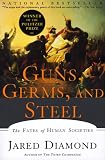
About the history of human civilization over the last 13,000 years. The books seeks to answer the question of why some societies in the world today are much more powerful than others. The answers to that question are traced back to circumstances at the beginning of civilization. Diamond’s writing is crisp and clear, and his thesis is well-supported, not to mention fascinating. Highly recommended.
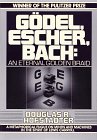
This is a wonderful book, I am glad I finally got around to reading it. Hofstadtder explains his ideas about consciousness and meaning using metaphors drawn from the Incompleteness Theorems of Kurt Gödel, the art of M.C. Escher, and the music of J.S. Bach. Hofstadter isn’t kidding about the “eternal” part either, the book is about 750 pages long.
Tips on running a successful small business by the founder of Nolo, a publisher of self-help law books. I enjoyed reading this book, it was clear and straightforward, although sometimes the examples were a little simplistic. I plan to read more law-related titles from Nolo.
A discussion of copyright issues in the digital era. This is a very good, but depressing book. Of special interest is the way Littman describes the point of view of the other side (I’m presuming you are primarily a consumer of copyrighted works and not a ‘content company’ or a lawyer who represents same) and the reasons why the process which creates copyright legislation almost always neglects the consumer (i.e., the reader/watcher/listener/etc.). Try googling on copyright issues for more information.
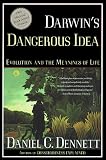
A book about the philosophical implications of Darwinism. Written with humor and keen insight, this book has many good references for further reading.
I read this book with great interest because one of its topics – the effect the theory of evolution has on ideas in non-biological settings like religion and culture – has fascinated me for some time. Although many people do not find any conflict (or even relationship) between evolution and religion, I have found it difficult to see evolution as neutral on the subject of faith in an absolute deity.
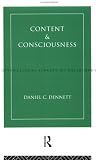
After reading Darwin’s Dangerous Idea, I decided to read Dennet’s other books. This book is Dennet’s Ph.D. thesis in which he sets out the problem of mind, disposes of some of the common fallacies in the philosophy of mind, and maps out some of the parameters that an analysis of the mind would have to adhere to. Although not as exciting as Darwin’s Dangerous Idea, the writing shows Dennet’s trademark clarity and I look forward to reading his subsequent efforts.
A great introduction to Buddhism without the mystical baggage of reincarnation or Zen “nothingness”. I’ve read a few other books on Buddhism and Taoism, but this is my favorite.
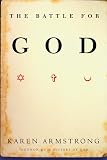
A study of religious fundamentalism in the Christian, Jewish, and Muslim faiths. Explores the factors underlying the recent rise of fundamentalism in all three religions with an engaging and complex treatment.