Book: Programming Erlang
An excellent introduction to the intriguing programming language and distributed software framework Erlang.
735 posts · RSS
An excellent introduction to the intriguing programming language and distributed software framework Erlang.
A wonderful and sad biography of the mathematician and ur-computer scientist Alan Turing.
An economic history of the world, concentrating on the origins of unequal outcomes and focusing on the role of culture.
Taleb explains his ideas regarding ‘Black Swans’, highly unlikely and largely unforeseen random events that nevertheless have significant impact. Taleb maintains that Black Swans dominate the history of the human race but are largely ignored due to a combination of psychological biases and what he dismissively refers to as “Platonic” theories like the classical theory of statistics centered around the Gaussian distribution.
It’s a lot to digest but NNT, as he styles himself, is a very entertaining and largely lucid writer. I would say he raises far more questions than he answers but the book is no worse for that and may be one of his central points – we just don’t know nearly as much as we think we do.
I found this book lying on the floor in the hallway of my apartment building. It is Mathewes-Green’s account of a year in a newly-formed Orthodox Christian church in the US, shortly after her conversion from Protestantism.
Parts of the book are quite engaging and I certainly learned much I didn’t know about the Orthodox church, which was basically nothing. Many sections, on the other hand, read like a rather tedious blog on her daily life. I’m afraid I skimmed through quite a bit and it felt much longer than the 200 or so pages it supposedly contains.
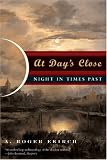
A history of night before the Industrial Revolution. Quite good.
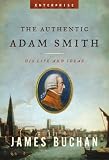
A short biography of Smith, focusing on his two major works, The Theory of Moral Sentiments, and The Wealth of Nations.
Loved it. Dickens is much funnier than I expected, given my memories of “A Tale of Two Cities”.
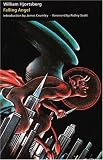
Whoah. Freaky noir mystery-horror.
Dalrymple is a retired English doctor who worked in Britain’s lower-class hospitals and in some of the poorer parts of the world. This is a collection of essays on the culture of present-day Western civilization and he does not like what he sees.
He writes beautifully and with sober penetration into many of the ills of modern society. But his ultimate diagnosis often rings false to me. A conservative, Dalrymple’s villain of choice is the Liberal Intelligentsia and his attempts to connect every present day evil with that nefarious club strains my credulity. In his essay on how the publication of “Lady Chatterly’s Lover” inaugurated the downward spiral, he writes that before the censure laws were relaxed the public had a “distinctly limited demand” for Lawrence’s work, and then, after publication, “one in four British households had acquired it”.