Book: Perl Cookbook
If you only use Perl occasionaly, this is a fantastic book. It is organized using “recipes” for accomplishing common tasks, so when you get stuck, you can look up the operation you are trying to implement.
735 posts · RSS
If you only use Perl occasionaly, this is a fantastic book. It is organized using “recipes” for accomplishing common tasks, so when you get stuck, you can look up the operation you are trying to implement.
This is an introduction both to the use of the CVS source code control system and to the process of open source development using CVS. The CVS-specific parts of the book are available online.
CVS is only one of many source code control systems, but it is one of the most common. Newer projects such as arch and Subversion are aiming to provide new, better replacements for CVS.

This is a nice introduction to the Zope web publishing system, the system used to create this website. The currently published edition is a bit out of date, however, so you might try the the online version.
Zope is a python-based object system with a web-based interface. It’s a lot of fun to work in, though I’m only beginning to scratch the surface of all its features.

A biography of the family of the current Dalai Lama. I found it very interesting.
Oh boy, this is good! Brooks explains why large software projects are difficult, why simply adding more programmers is usually harmful rather than helpful, and why there is no “Silver Bullet” in Software Engineering.
A beautiful and haunting story with wonderful prose. Very good.
A summary of the UNIX design philosophy, this book is a bit out of date and needs a more abstract and less dogmatic second edition.
I was rather disapointed by ‘The UNIX Philosophy’ (TUP). First of all, the book feels out of date. This feeling is partly due to the fact that TUP was published in 1995 and thus many of the examples are anachronistic. However, the datedness of TUP also stems from a second flaw – some of the tenets of the UNIX philosophy outlined in the book are too concrete and thus appear to conflict with some present-day practices which many ‘UNIX people’ would not, I think, consider improper. Finally, the book sometimes presents practical (and thus adaptable) design principles as unshakeable articles of faith in the UNIX Religion.
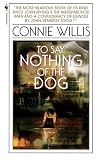
A fairly funny detective story with time travel and a little chaos theory. The mystery writer is present in the story in the form of the “continnum”, a never-explained phenomenon which attempts to prevent historians who travel back in the past from messing up history too much by arranging for all kinds of doubtful coincidences in order to fix things and solve the crime.
In addition to numerous references to 1930’s mystery authors, like Agatha Christie, there are quite a few references to a 19th century novel called Three Men in a Boat (To Say Nothing of the Dog). Having never read that book, I probably missed a number of nods to that, apparently famous, British comedy by Jerome K. Jerome.
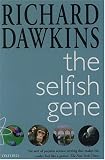
An engrossing discussion of selfishness and altruism from the point of view of evolutionary theory. Most of the ‘selfishness’ and ‘altruism’ in the book are unconscious evolutionary strategies for individuals and for genes rather than the conscious intentions normally implied by those terms.
In the last chapter of The Selfish Gene (added in the second edition) Dawkins summarized The Extended Phenotype, but recommended skipping the chapter and reading the whole book. So that’s what I did, and I was not disappointed. Dawkins considers this book to be his best and Daniel Dennet, in the afterward for the second edition, says it is required reading for modern students of neo-Darwinism.