I was browsing my list of free programmers’ editors and discovered some broken links. It seems a couple of editors have gone the way of all bits. Farewell, ManyaPad! Goodbye, lpe! We shall mourn your loss and taste your power no more.
In the plus column, I found a living editor: Gobby, a free real-time collaborative editor with support for programming lanuage syntax highlighting.
Up until recently, if I needed to launch a child process from a Python program, I would use the system() function in the os module, because it was the easiest one for me to remember how to use. This is despite the fact that system() is rarely what I actually wanted.
For starters, os.system() runs the command in a shell, so unless you are actually using the shell redirection operators or argument expansion, the function is just launching a shell in order to run the program you really wanted to start in the first place. Second, the shell is going to interpret your arguments the way shells do – splitting arguments on spaces, expanding wildcards, etc. If one of the arguments is a filename with spaces and shell special characters, you have to escape it very carefully (and in a system-specific way) to prevent the shell from messing with it. Naturally, I often just wouldn’t bother and thus my commands would fail whenever a strange filename showed up.
Okee dokey, I just finished my Python script to turn my book database into wordpress blog entries. Instant wordpress blog history, it’s like I’ve been blogging for years! Back when it wasn’t cool.
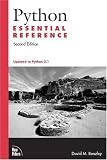
From the title, I expected this to be a thorough reference to the standard Python modules, but instead it is a collection of sample scripts which illustrate the basic usage of the standard modules. In that respect it is similar to the Python Cookbook, but the Cookbook has better recipes and more in-depth discussions of the recipes. Also, this book only covers up to Python 2.0 and is thus somewhat out of date. For example, it covers the obsolete ‘rfc822’ module, but not the new ’email’ module. Also, this book has at least one glaring error – it claims that XML is an application of SGML, which is simply not true. XML is a full-blown meta-markup language like SGML.
This Python programming cookbook lives up to the standard set by the excellent Perl Cookbook. In addition, this book is associated with a website where the programming recipes were originally collected from Python users. The website continues to grow and collect new recipes and thus represents a great resource for Python programmers.
This is a fairly good introduction to the Python programming language. Its organization, however, makes it hard to use when you just want to refresh your memory about a particular detail you have forgotten.
This is a nice introduction to the Zope web publishing system, the system used to create this website. The currently published edition is a bit out of date, however, so you might try the the online version.
Zope is a python-based object system with a web-based interface. It’s a lot of fun to work in, though I’m only beginning to scratch the surface of all its features.
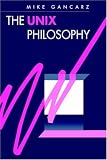
A summary of the UNIX design philosophy, this book is a bit out of date and needs a more abstract and less dogmatic second edition.
I was rather disapointed by ‘The UNIX Philosophy’ (TUP). First of all, the book feels out of date. This feeling is partly due to the fact that TUP was published in 1995 and thus many of the examples are anachronistic. However, the datedness of TUP also stems from a second flaw – some of the tenets of the UNIX philosophy outlined in the book are too concrete and thus appear to conflict with some present-day practices which many ‘UNIX people’ would not, I think, consider improper. Finally, the book sometimes presents practical (and thus adaptable) design principles as unshakeable articles of faith in the UNIX Religion.